Water, smoke, mold or sewage in your Long Beach home? We come out at any hour, stop the damage, and stay with you until it's under control.
SOS Restoration of Long Beach is the emergency cleanup company people here call when a pipe lets go, a fire leaves smoke in every room, or something starts growing behind a wall. Water, fire and smoke, mold, storm and sewage, across Long Beach and the cities around it, 24 hours a day. Call (657) 660-4185.
What does SOS Restoration actually do?
Five things bring people to this number, and we built the company around them.
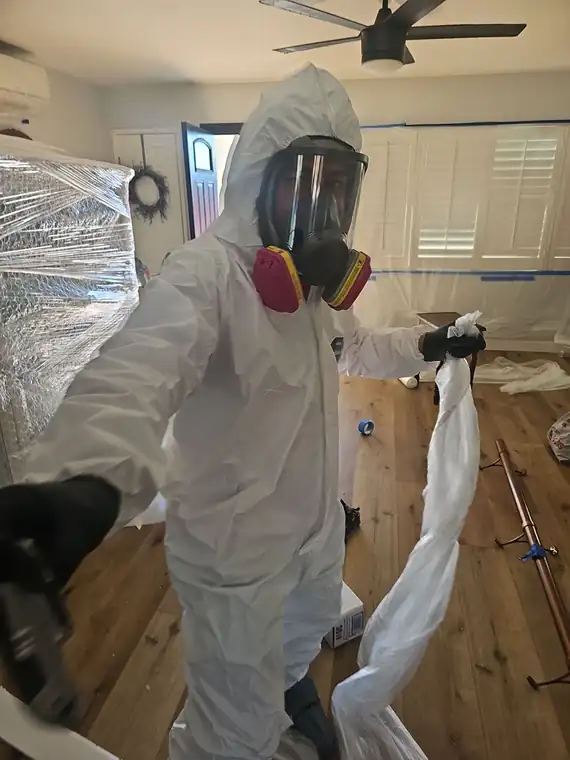
Water damage
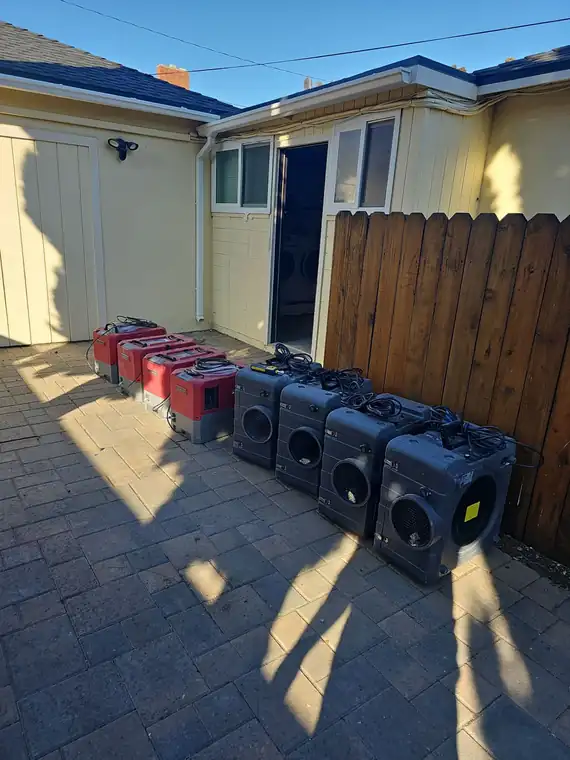
Mold
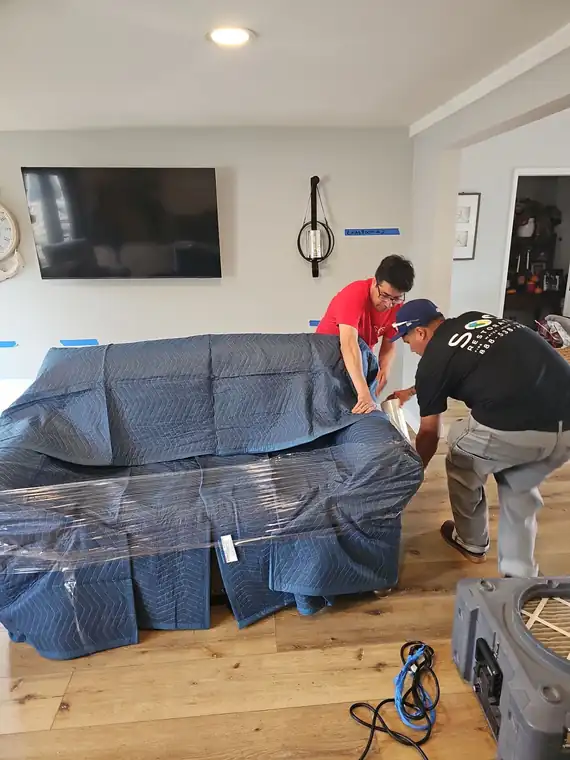
Fire and smoke
Storm damage
Sewage
Why do people call us instead of the big franchise?
Because we answer. At three in the morning it’s a person who picks up, not a menu, and the person who picks up knows what a wet slab does overnight.
Because we’ll tell you when you don’t need us. A sink that overflowed onto tile while you were standing right there is not a job. We’ll say so, tell you what to check in two days, and hang up. Half the trust we’ve earned in this city came from that phone call.
Because you get the file. Every room photographed before anything moved. Moisture readings by the day, against a dry part of your own house. A written scope of what came out and why. When your insurance company asks what happened, you hand them exactly what we saw. No arguing.
And because we know these houses
Because we know these houses. Half of Long Beach went up before 1960, most of it on concrete slab, and downtown is almost entirely apartments and condos where one failed line on the fourth floor means three wet ceilings under it. We’ve stood in enough of them to know where the water goes before we open the door.
And because se habla español. If English is going to cost you time at two in the morning, don’t spend it. Tell us what happened in Spanish and we go from there.
It's happening right now. What do I do?
The next ten minutes matter more than the next ten hours, and they’re simple.
What not to do: don’t scrub, don’t run the heater to dry it faster, and don’t pull up the carpet yourself. Most of what people do in the first hour with the best intentions makes the job bigger.
1. Stop the water
2. Cut the power
3. Photograph everything
4. Call us
Where we go
Long Beach first, always. Then the Los Angeles County cities around it, east through the Gateway cities and west across the South Bay, out to about sixteen miles: past that the drive stops being an emergency and starts being a scheduling problem.
Should I call my insurance company or a restoration company first?
Call whoever can stop the water. Your insurance company can wait ten minutes, and nothing you do in the first hour to protect the house will hurt your claim. The standard policy asks you to prevent further damage, so moving fast is what it wants from you, not what it punishes.
Then open the claim. Once you do, California gives the carrier a deadline to get back to you and hands you the right to choose who does the work. What that looks like in practice, and what to have ready, is all on the insurance claim page.
How soon can someone actually get here?
We answer now. That part is a promise.
A number of minutes is not, and anyone who quotes you one off a web page hasn’t looked at the 710 at five o’clock. What you can do is ask on the call where the truck is and what it’s finishing, and you’ll get a straight answer. What actually decides the outcome is a longer clock anyway: water that’s dealt with tonight is a drying job, and water that waits until Thursday is a demolition one.
What does it cost to have you come out?
Water damage work starts at $60 an hour. An emergency call-out, the kind where we’re loading the truck at two in the morning, starts at $90 an hour. Both depend on the job: how many rooms took water, how long it sat before anyone found it, and what’s under the floor. A wet bathroom on tile is a different afternoon from a whole ground floor on carpet over slab.
Having us come out to look and tell you what you’re dealing with doesn’t commit you to anything. You’ll know what we’d do and roughly what it takes before you decide. The line items you’d see on an estimate, and how to spot a bad one, are on the cost page.
What happens after you leave?
You get the file, and the file is most of what you’re paying for once the water stops. Readings by the day, photographs from before anything moved, and the scope in writing. Our part ends when the house is dry, the ruined material is out, and the source is identified. Putting the drywall and the floor back is a different trade, and the file is what that contractor prices from. Ask them to read the final readings before they close a wall.
Can't call right now? Send it and we call you.
Your phone number is the only thing we really need. Everything else helps us load the truck right.
If the floor is still wet, call (657) 660-4185. Somebody in Long Beach picks up, and we'll tell you straight whether you need us tonight.